
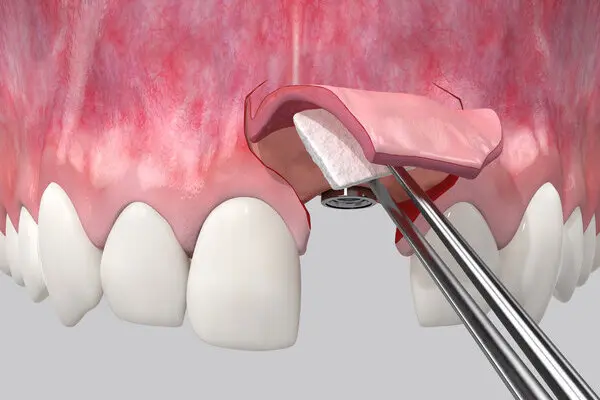

Modified buccal pedicle flap with collagen matrices
 Document
Soft tissue deficiencies around teeth and implants remain a significant challenge in periodontal and implant therapy, particularly in areas with limited keratinized tissue or thin gingival biotypes. The Buccal Pedicle Flap (BPF) has been widely used as a minimally invasive technique to improve soft tissue coverage and vascularization. However, traditional approaches may require autogenous graft harvesting, increasing surgical morbidity.
This study describes a modified Buccal Pedicle Flap technique combined with collagen matrices as a biomaterial scaffold to enhance soft tissue augmentation while reducing the need for connective tissue grafts. After careful preparation of the recipient site, a buccal pedicle flap is mobilized while preserving its vascular supply. A resorbable collagen matrix is placed beneath the flap to provide structural support, promote cell migration, and stabilize the soft tissue during healing.
The combination of the pedicled flap’s intrinsic blood supply with the regenerative properties of collagen matrices may improve tissue thickness, enhance keratinized tissue formation, and reduce patient morbidity. Additionally, the use of collagen substitutes can simplify the surgical procedure and shorten operative time by avoiding donor-site harvesting.
This modified approach may represent a predictable and minimally invasive strategy for soft tissue reconstruction in periodontal and peri-implant defects, offering favorable esthetic outcomes and improved patient comfort.
This content is reserved for OREC Prime members.
Already have an OREC Prime account?
Not in OREC Prime Community yet?
Join a growing network of professionals and get free access to exclusive resources.
